
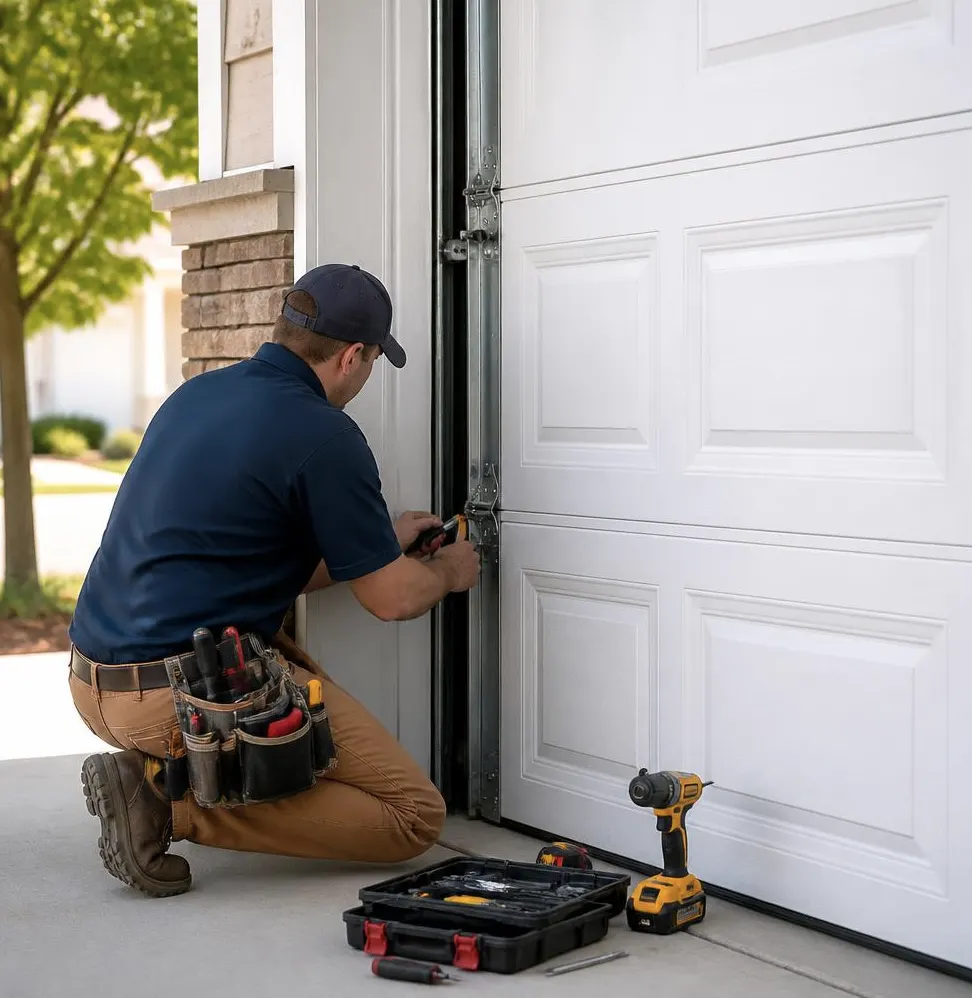
What a Technician Sees After a Windy Night
The calls usually sound the same: a homeowner walks into the garage the morning after a dust storm and the door is sitting crooked in its tracks, or one panel is bowed inward like it took a punch. Sometimes the opener is clicking and straining but the door won't budge because a roller popped out of the track during a gust. On older doors, we'll find the whole section flexing when you push on it by hand, which means the wind already won that argument once and is waiting for round two.
None of this is random bad luck. It's physics meeting a door that wasn't checked before the season's wind events started.
Why the Garage Door Is a Home's Weakest Wall
A garage door is the single largest moving opening in most homes, often 16 feet wide or more, and it's built from thin steel or wood panels connected by hinges and rollers instead of being tied directly into the framing like a wall. Under normal conditions that's fine. Under wind pressure, it's a different story.
When a strong gust hits the front of a house, pressure builds up outside while it drops inside the garage. If the door isn't braced or rated to handle that pressure differential, it can bow outward, buckle, or get sucked off its tracks entirely. Once a garage door fails, wind rushes into the structure and starts pushing on the roof and interior walls from the inside, which is why engineers consider it the weak point in a home's wind resistance, not just an inconvenience if it breaks.
How Local Weather Sets This Up
Dry heat spends months baking the lubricant out of rollers, hinges, and the torsion spring system, so moving parts get stiff and start binding right before dust storms roll through. Monsoon-season gust fronts can hit with sudden, strong straight-line winds and blowing dust, and those gusts arrive fast with little warning. Even as the season winds down, the East Valley still sees abrupt wind events tied to passing fronts, so the risk doesn't disappear once the heaviest monsoon activity is over. On top of that, UV exposure dries out weatherstripping and seals, leaving gaps where wind and dust can work their way in and add stress to panels that are already compromised.
Pre-Storm Checklist
- Inspect rollers and tracks. Rollers should turn smoothly with no grinding or wobble. Tracks should be straight, tightly bolted, and free of dust buildup that can cause binding.
- Check hinges and fasteners. Loose hinges or missing bolts let panels shift under pressure instead of holding their shape. Tighten anything that moves when you wiggle it by hand.
- Look at the torsion springs. Heat cycling and dry air stress springs over time. A spring that's visibly stretched, rusted, or gapped between coils is a failure waiting for a high-wind day to happen. This isn't a DIY fix given the stored tension involved.
- Examine panels for flex. Push firmly in the center of each panel. Noticeable give or oil-canning (a popping, dented look) means the panel has lost structural rigidity.
- Replace worn weatherstripping. Cracked or brittle seals around the bottom and sides let wind-driven dust and water into the garage during a sudden storm.
- Consider a bracing kit. Older doors without horizontal wind struts benefit from retrofit bracing that spreads wind load across the panel instead of concentrating it at weak points.
- Test the opener's battery backup, if equipped. Power can drop during a storm, and you don't want to be stuck unable to open the door manually in an emergency.
After the Storm Passes
Once the wind and dust settle, walk the door through a full open-and-close cycle while watching and listening. Grinding, hesitation, or a door that doesn't sit flush at the bottom all point to track misalignment or roller damage that happened during the event, even if nothing looks obviously broken from the outside. Clear visible dust out of the tracks before running the door repeatedly, since grit acts like sandpaper on rollers and bearings.
When to Call Mesa Garage Door
If a panel is bowed, a spring looks stressed or has snapped, or the door won't track smoothly after a wind event, it's time to call rather than keep forcing the opener to push through resistance. Our technicians handle Panel Replacement for sections that have buckled or dented beyond repair, and Spring Replacement for torsion systems that have weakened from heat cycling or sudden wind load. We'll also check track alignment, hardware, and weatherstripping as part of the visit so small issues get caught before the next storm rolls through, rather than after.
If you're in Mesa, Gilbert, Chandler, Tempe, Apache Junction, Queen Creek, Scottsdale, or Gold Canyon and want your garage door checked before the next round of high wind, call Mesa Garage Door and we'll get a technician out to take a look.